SHARE :
Spain: Europe's Trending Christmas Destination
29 of September of the 2026
I have spent the last thirteen Christmas seasons in Spain with the Spanish family I married into in 2014, and I’ve loved every one of them.
I love Christmas in general but Christmas in Madrid, where we usually spend the height of the holiday season, is especailly festive.
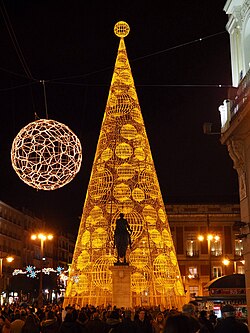
During the Christmas season, when people have more time off from school and work, Spain's vibrant street life intensifies, wrapped in the sparkle of Christmas lights and occasionally decorated with a santa hat just for fun.

The weather helps, too. In Madrid, temperatures during the day are well above freezing. When the sun comes out, as it often does, the Mediterranean climate makes for a very pleasant December afternoon. While we were living in Minnesota, our Christmas break to Madrid was a welcome change of climate. It's also the perfect time of year for chocolate con churros (summer is impossibly hot for sucha heavy food).
Those sunny days are shorter, of course (take too long of a siesta and you’ll miss it), but earlier-falling nights glow up with Christmas lights, particulary in the city center and main thoroughfares and promenades. The walk down the famous Calle de Alcalá to the Plaza de Cibeles is magical immersion in glowing icecicles, one of my favorite little Christmas rituals. Other cities, such as Vigo and Malága are also well- known for their Christmas lights, as are many small towns even in more off-the-beaten path places. Spain, known for its late dinners and night life, is the perfect place setting for city Christmas lights.

Spain’s Deep Christmas Traditions
Spain’s festive Christmas is a reflection of its Christian, and specifically Catholic heritage, which have forged both a love for Christmas and a set of deeply held holiday traditions. Some of these are shared with Italy and other historically Catholic European countries, but each place gives its own touch to Christmas.
- Nativity Scenes. Every Christmas, my father-in-law built an intricate and extensive nativity scene in the family home, often complete with moving parts such as a wind mill. Madrid's most traditional Christmas market in the Plaza Mayor is dedicated precisely to selling the detailed figurines and the moss used to recreate Bethlehem in flats across the city.
In public places, whether religious or civic, nativity scenes are on display throughout the country, with very little controversy. In many cases, they are centuries-old pieces of invaluable art, worked in traditional styles or inspired in the Italian barroque, if not made by Italian artists, (its always worth remembering that Sicily and parts of the Low Countries were ruled by the Spanish Hapsburgs for a while). The tradition, which has also been submitted for UNESCO recognition, is still quite alive today. In the village where I live, for example, a local couple made a nativity scene out of resin using a 3-D printer. It's put up every year in the restored chapel, where it takes up three walls and includes scenes evoking everywhere from ancient Egypt to our little village, and includes a couple of laughs for the most observant. One figure is taking a whizz into a streem. Volunteers man the chapel for days while not only us villagers stop by to contemplate it but people from kilometers around, too.
- The Three Kings. Christmas in Spain culminates with the arrival of the Three Kings on January 6 to deliver presents to all the children in Spain. Christmas extends through this day, making it extra long compared to parts of the world where it effectively ends on January 1. Now, to be perfectly honest, Santa Clause has indeed entered into Spanish Christmas, and many children receive presents on Christmas Day, too. Part of the reason this partice has popularized is that children can thenplay witht heir gifts during their holidays. But Papa Noel has not at displaced the Reyes Magos, who still make a entrance of pomp and circumstance into Spain on the night of January 5, during the Cabalgata de los Reyes (the parade of the kings), a parade of lights with floats, dancers, musicians, and more. In Madrid, it goes down the Castellana to Plaza de Cibeles where one of the kings gives a short, encouraging address. In theory, his talk is for the kids, in reality it hits the adults harder. Every city and many a town in Spain has its cabalgata.
- Food. No holiday is a holiday without delicious food. In Spain, the most traditional Christmas food is turrón, nugget in English, and the most traditional concoction of this candy is a mixture of almonds and honey, but now flavors are as diverse as pistachio and chocolate.
At least in our family, turrón is not the favorite Christmas treat.
Our preferences are the following: frutas de Aragón (candied fruit covered in chocolate), pan de cadiz, and marzipan. Admittedly, the last two are also confecciones based on a combination of almonds and sugar but with a result quite distinct from turrón.
For Spanish families, Christmas day itself is all about the family gathering and the food. On Christmas Eve, Spaniards have a multigenerational gathering around what is usually the most elaborate meal of the year–courses of jamón and seafood, canapés, a soup, roast lamb or suckling pig, dessert, and a champagne toast. They dress up a bit, too. Its an occasion. Some have compared it to Thanksgiving Day in the United States, where the celebration also centers on an extravagant meal with family and friends. But to this American it still just feels different. Many restaurant also offer special menus for Christmas dinner, as well. Though reservations are a must.The more casula restaurants close that evening.
- Christmas Carols. Spain has its own collection of Christmas carols, villancicos in Spanish, and they have a very different tone than those of the German, English, or American tradition, a touch of tambourines and the upbeat, syncopated rhythms of flamenco. This is an absolute classic that every Spaniard knows.
Other Christmas Activities in Madrid
The post office, Correos, sets up the Department of Special Deliveries, where kids are taken on a journey through how the Three Kings receive their requests, meeting little helpers along the way, and finally sending off their own letter to the Magic Kings.
Churches host concerts of Spanish Christmas carlos, balconies of the public buildings become the scene of tiny concerts. See the complete schedule of musical and other events here.
At The Matadero, a cultural center, food trucks, concerts, and workshops take place during the day and evening, much of it with a focus on keeping the kids entertained but without bore adults either.
You can take a night tour of the city’s lights on the Navibus.
The city’s main monuments are also open most days, as of course, is also El Retiro, the city’s elegant main park.
The Circo Price theatre also offers great entertainment at this time of year, with shows and programs directed at children.
Just beyond Madrid are mini Christmas cities with football field lengths of light displays you can wander through, get a hot drink, listen to live music, go on carnival rides, or even ice skate. We love taking the kids to Magicas Navidades in Torrejón de Ardoz. Every year they add new displays and activities. Pro tip: arrive at sunset to get ahead of the crowds that come after dark.
The Puy du Fou theme park also puts a Christmas touch to live reneactments of Spanish history and fireworks display.
So if Christmas with sun, real wine, jamón iberico, and chocolate con churros sounds like your thing, head to Spain!